
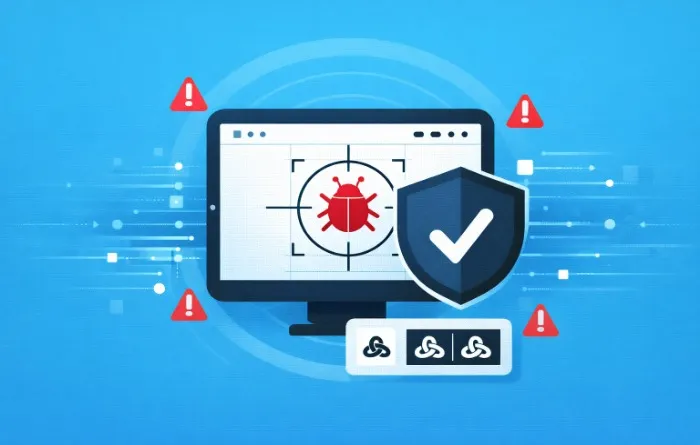
Malware Detection API – Real-Time Threat Detection
Original price was: ₹45,000.00.₹30,000.00Current price is: ₹30,000.00.
The Malware Detection API is designed to address these challenges by providing file and URL malware scanning, combining signature-based and behavior-based detection, performing real-time threat analysis, supporting API and webhook-based scanning, enabling quarantine and alert mechanisms, and ensuring secure file handling throughout the process.
This API is ideal for web platforms, fintech systems, SaaS products, eCommerce websites, cloud storage services, developer tools, and cybersecurity solutions.
Description
Malware threats continue to evolve rapidly, targeting web applications, APIs, file uploads, URLs, emails, SaaS platforms, and enterprise systems. From ransomware and trojans to phishing URLs and malicious scripts, malware attacks can result in data breaches, financial losses, downtime, compliance issues, and reputational damage.
Traditional antivirus solutions are no longer sufficient for modern, cloud-based applications that process large volumes of files and external URLs in real time. Businesses need automated, API-driven malware detection that works seamlessly within their systems.
The Malware Detection API is designed to address these challenges by providing file and URL malware scanning, combining signature-based and behavior-based detection, performing real-time threat analysis, supporting API and webhook-based scanning, enabling quarantine and alert mechanisms, and ensuring secure file handling throughout the process.
This API is ideal for web platforms, fintech systems, SaaS products, eCommerce websites, cloud storage services, developer tools, and cybersecurity solutions.
⚙️ How the Malware Detection API Works
The Malware Detection API functions as an automated malware scanning and threat analysis engine, protecting your applications from malicious uploads and dangerous web links.
- 🔍 File & URL Malware Scanning
- Every file upload or URL submission is automatically routed through a high-speed scanning cluster to detect embedded threats.
- 🧬 Signature & Behavior-Based Detection
- The system cross-references global signature databases while simultaneously using heuristic analysis to catch “zero-day” or polymorphic malware.
- ⚡ Real-Time Threat Analysis
- Analysis is completed in milliseconds, ensuring that user experience is not delayed while security checks are performed.
- 🔗 API & Webhook-Based Scanning
- Seamlessly integrate scanning into your existing CI/CD pipelines or cloud storage workflows via direct REST calls or automated webhooks.
- 🛡️ Quarantine & Alert Mechanisms
- Infected files are instantly isolated in a secure quarantine zone, and your security team is notified via real-time alerts.
- 🔒 Secure File Handling
- All processing occurs in isolated “sandbox” environments, ensuring that suspicious code can never execute or leak data into your production environment.
This workflow ensures fast, accurate, and secure malware detection, maintaining the integrity of your digital assets.
🌟 Key Features & Benefits
- 🌐 File & URL malware scanning
- 🧬 Signature & behavior-based detection
- ⚡ Real-time threat analysis
- 🔗 API & webhook-based scanning
- 🛡️ Quarantine & alert mechanisms
- 🔒 Secure file handling
The Malware Detection API provides a powerful, automated defense layer that scans every interaction, ensuring your platform remains clean and your users stay protected from sophisticated cyber threats.
🚀 Business Benefits
- 🛡️ Prevent malware from entering systems
- 👤 Protect users and applications from threats
- 🤖 Automate malware scanning workflows
- 📉 Reduce security incidents and downtime
- 🤝 Improve compliance and trust
- 🏗️ Strengthen overall cybersecurity posture
By integrating this API, organizations can transition from reactive cleanup to proactive defense, ensuring that malicious software is neutralized before it can damage infrastructure or compromise sensitive data.
🏭 Use Cases & Industries
The Malware Detection API is a critical security layer for modern digital infrastructures, ensuring that every user interaction remains safe and threat-free:
- 🌐 Web Applications & SaaS Platforms
- Securing user-generated content by scanning profile pictures, documents, and shared files.
- Validating and scanning URLs in comments or bios to prevent phishing and drive-by downloads.
- 💳 Fintech & Banking Systems
- Scanning transaction-related attachments like invoices, KYC documents, and proof of payment.
- Integrating malware prevention into high-security financial workflows.
- 🛒 E-commerce Platforms
- Protecting marketplaces by scanning bulk product uploads and vendor-provided assets.
- Shielding customers from malicious links in support tickets or community forums.
- ☁️ Cloud Storage & File Sharing
- Automated scanning of files at rest to detect “sleeper” malware before it is shared.
- Providing secure download protection for end-users.
- 🧩 Developers & Security Platforms
- Empowering cybersecurity platforms with programmatic API integrations.
- Building custom threat detection systems tailored to specific enterprise needs.
🔍 Comparison: Malware Detection API vs Traditional Antivirus
| Aspect | Malware Detection API | Traditional Antivirus |
|---|---|---|
| API integration | ✅ Yes (Native REST) | ❌ Limited / Complex |
| Real-time scanning | ✅ Yes (Optimized for Web) | ❌ Often delayed/Scheduled |
| URL scanning | ✅ Included | ❌ Limited/External addon |
| Behavior-based detection | ✅ Supported (Heuristic) | ❌ Often basic/Signature-only |
| Automation | ✅ Webhooks & SDKs | ❌ Manual intervention |
| Cloud-ready | ✅ Yes (SaaS-native) | ❌ Limited (Device-specific) |
⭐ Why Choose This Malware Detection API
- ⚡ Real-time file and URL malware scanning
- 🧬 Hybrid signature and behavior-based detection
- 🔗 API and webhook automation support
- 🛡️ Built-in quarantine and alerts
- 🔒 Secure file handling processes
- ☁️ Designed for modern cloud applications
This API is built for platforms that require fast, automated, and secure malware detection without compromising performance.
❓ FAQs
What is a Malware Detection API?
A Malware Detection API is a specialized security service that allows developers to programmatically scan files and URLs for malicious content, preventing viruses, ransomware, and phishing links from entering their systems.
Does it support both file and URL scanning?
Yes. The API is versatile, supporting direct file binary uploads for deep inspection as well as URL submissions to check for malicious redirects, phishing kits, and drive-by download threats.
How does detection work?
The API uses a multi-layered approach: Signature-based detection matches files against a database of known threats, while Behavioral analysis uses sandboxing to identify suspicious actions from previously unknown (zero-day) malware.
Are alerts generated when malware is detected?
Yes. The API includes built-in alert mechanisms, such as real-time Webhooks or email notifications, ensuring your security team can respond instantly to a threat discovery.
Is file handling secure?
Yes. Files are processed in isolated, volatile memory environments and are automatically deleted after scanning. High-level encryption (TLS/SSL) is used during transit to ensure total data privacy and compliance.
Related products
-
AI Chatbot API – Smart Conversational Bots
Original price was: ₹140,000.00.₹100,000.00Current price is: ₹100,000.00. -
Inventory API – Real-Time Inventory Management
Original price was: ₹70,000.00.₹55,000.00Current price is: ₹55,000.00. -
Document Scanning API – Intelligent Document Digitization
Original price was: ₹45,000.00.₹30,000.00Current price is: ₹30,000.00. -
Face Detection API – Real-Time AI Face Detection
Original price was: ₹45,000.00.₹30,000.00Current price is: ₹30,000.00.






Reviews
There are no reviews yet.